
Strategy
Hale AI Implementation at a Value-Based Care Organization: Partnering with Clinical Coaching to Scale Training
Clinical coaches play a critical role in shaping how nurses communicate with patients, apply clinical reasoning, and deliver effective care. However, traditional coaching methods—often dependent on sporadic live-call shadowing—can limit visibility into real performance and make it difficult to provide consistent, high-quality feedback. Hale AI addresses this gap by transforming simulated patient interactions into structured, objective insights that coaches can use to guide clinician development more effectively.

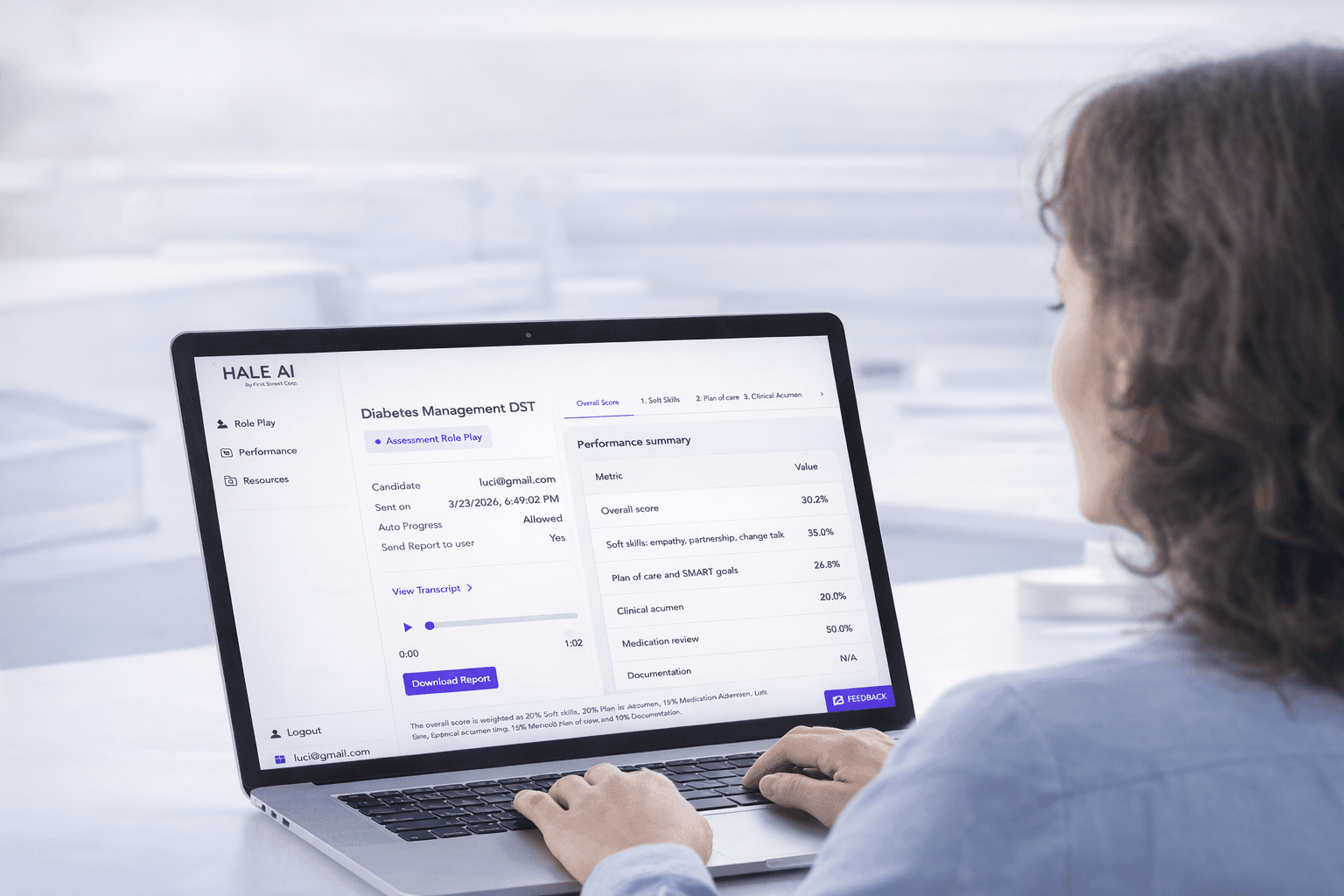
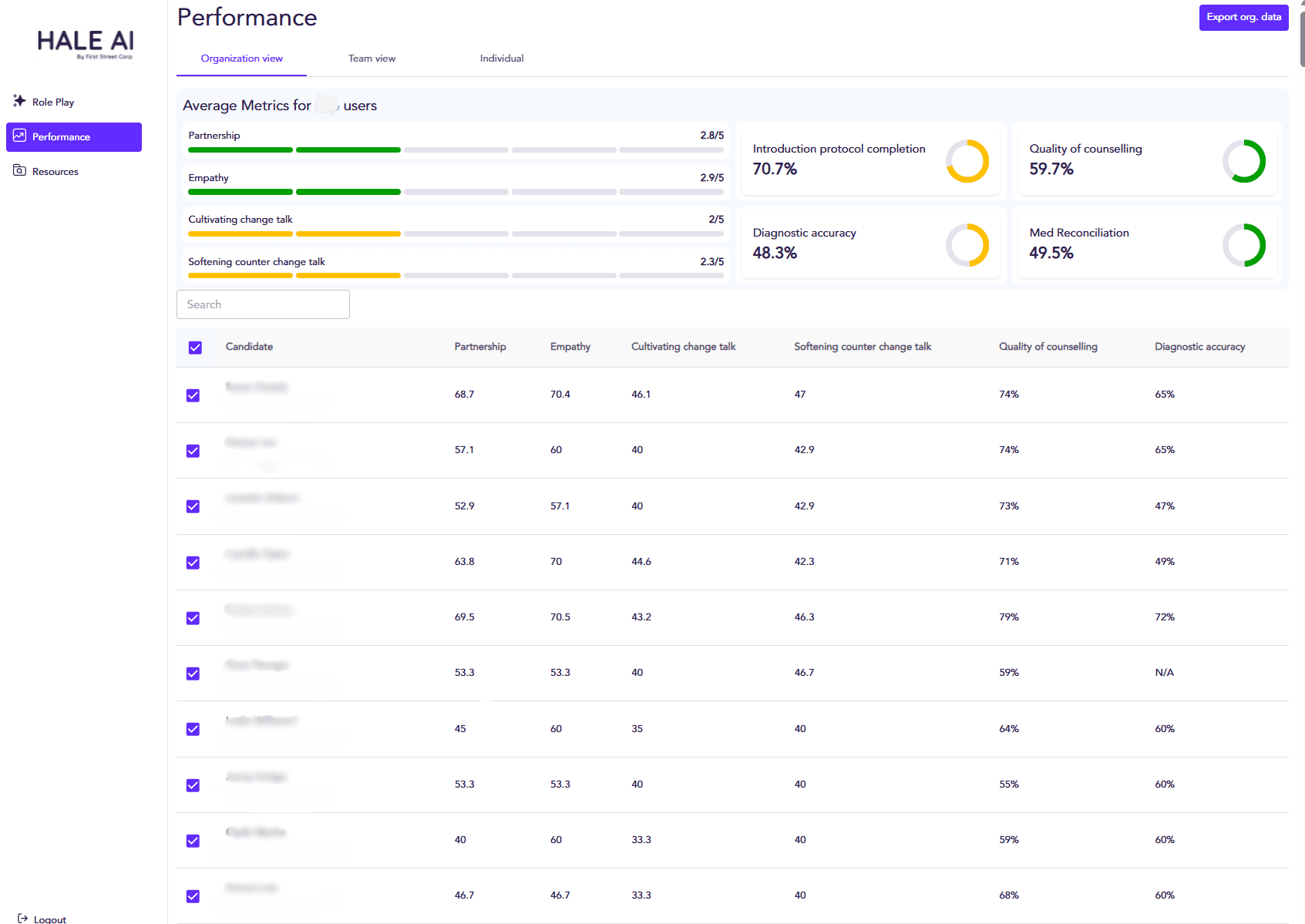
Through realistic simulations that replicate complex patient scenarios—including comorbidities, disengagement, and challenging conversations—coaches gain a consistent view of how nurses think, communicate, and make decisions in practice. Each interaction is translated into measurable performance data, enabling coaches to identify skill gaps, track progress over time, and deliver targeted, evidence-based coaching. This shifts coaching from subjective observation to a more scalable, data-driven approach—ultimately helping coaches support their teams with greater precision, confidence, and impact.
One of the biggest advantages Hale AI offers clinical coaches is improved visibility into clinician performance without depending solely on live-call shadowing. Traditional coaching methods often rely on listening to real patient calls, which can be inconsistent, hard to schedule, and limited in what they reveal.
Hale AI simulations give coaches a reliable way to observe how nurses handle patient conversations, especially in areas like motivational interviewing, empathy, and clinical structure.
“Shadowing was hit and miss. You may not find a good call to shadow and may have to move on to the next nurse. Hale AI was the only way to get a good view of how the nurse is talking to the patient—especially around soft skills.”
— Clinical Coach
By creating a repeatable coaching environment, Hale AI helps coaches assess performance more consistently and support development with greater precision.
Hale AI also enhances coaching by providing structured scoring and data-driven feedback across key performance areas such as clinical counseling quality, empathy, partnership, and communication techniques. This makes it easier for coaches to identify specific skill gaps and create targeted coaching interventions that address real needs.
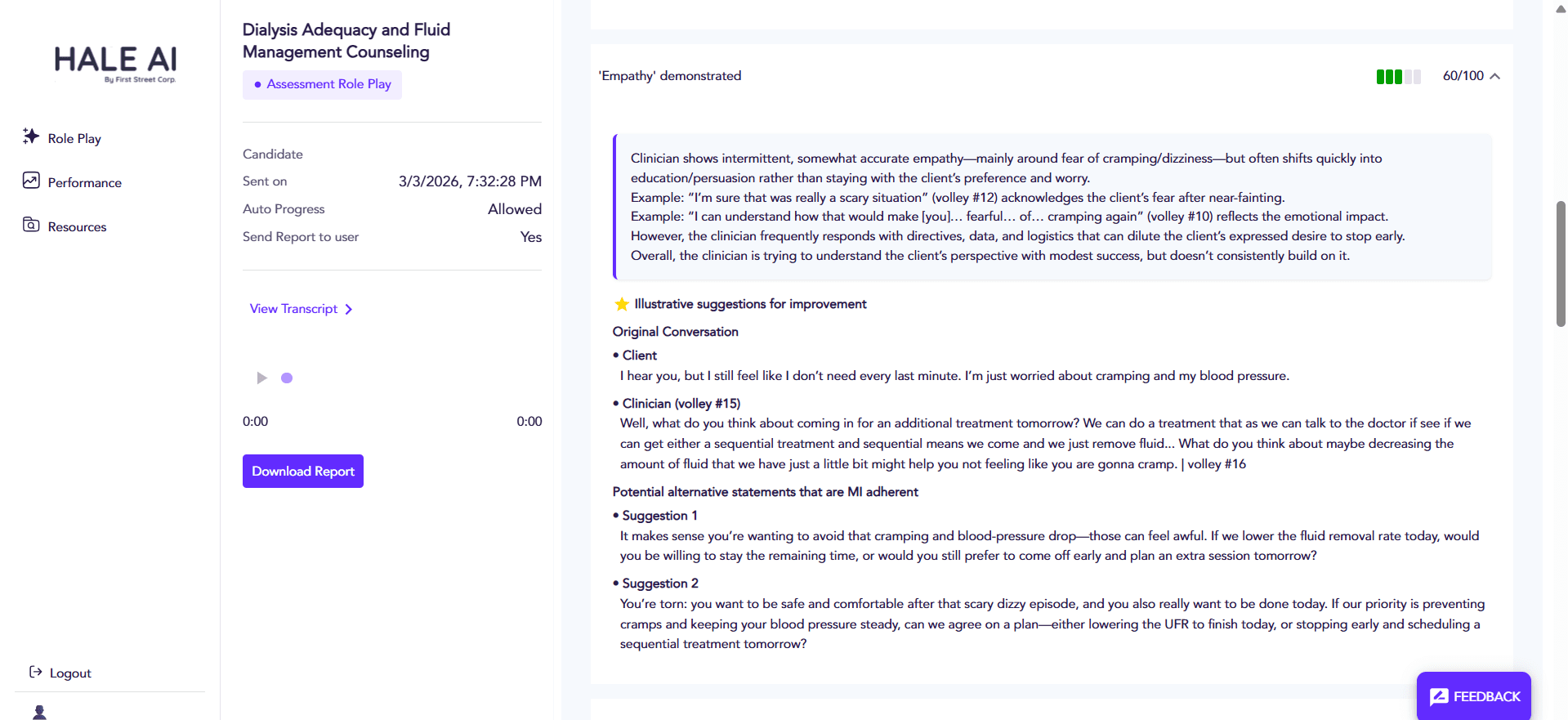
Another major benefit is feedback credibility. Because Hale AI grounds its insights in evidence from the actual conversation, coaching becomes more objective and less reliant on personal interpretation. Coaches found that when Hale AI surfaced the same improvement areas they had already noticed, nurses were more open to the feedback and more motivated to improve.
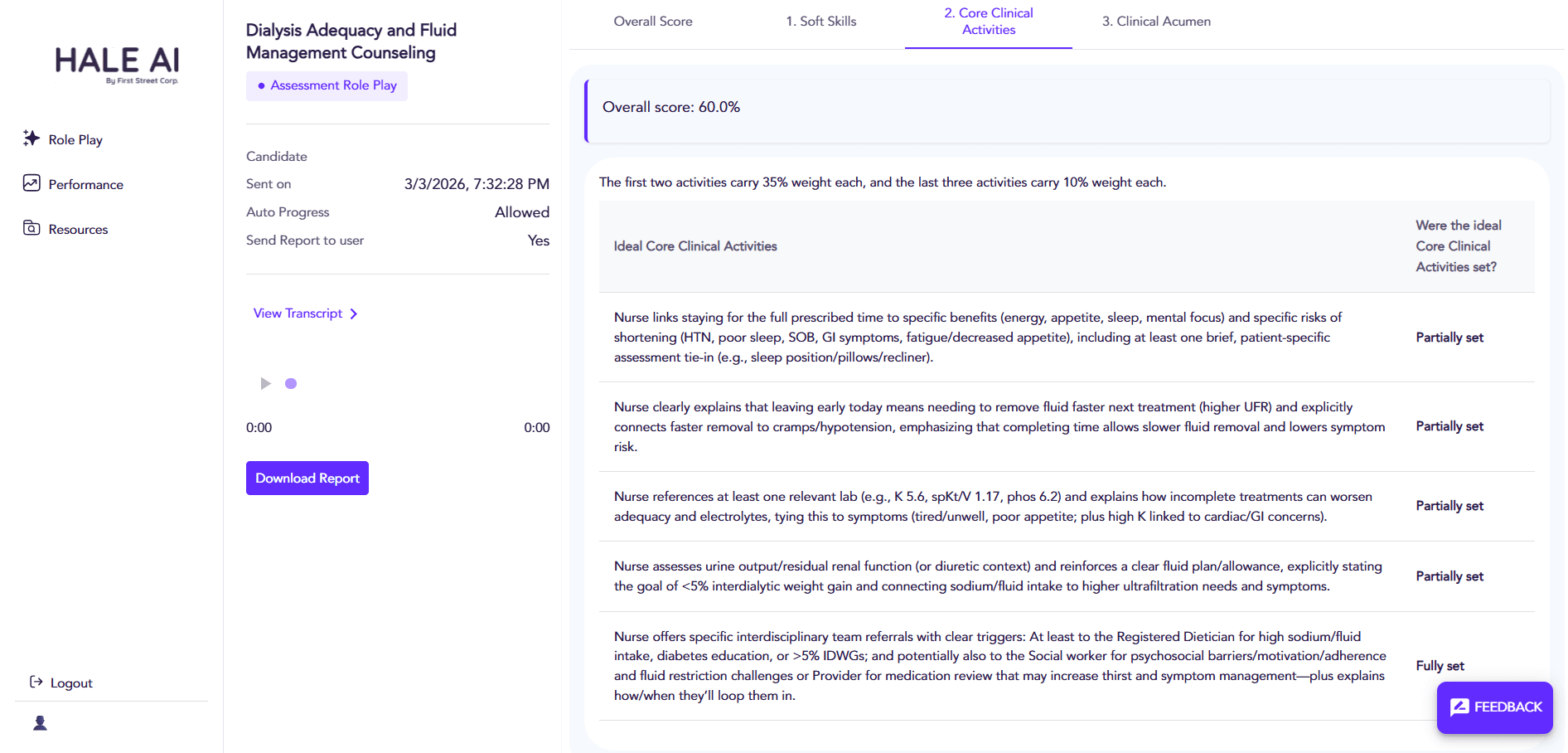
“Hale AI findings were very much in line with coach observations,” which increased credibility and helped feedback land faster… “Reviewing the report itself with the nurse helps them to visualize a stronger plan of care based on the ideal goals and how to get the patient to agree to it.”
— Clinical Coach
The platform also helps coaches track progress over time. When simulation practice was combined with coaching, nurses showed measurable gains in medication review, plan-of-care development, and overall clinical performance. This gave coaches a clearer view of how their guidance translated into meaningful clinician improvement.
Hale AI Implementation at a Value-Based Care Organization: Partnering with Clinical Coaching to Scale Training

How Is Hale AI Beneficial for Nurses?

Simulations That Build Real-World Clinical Skills: How Hale AI Prepares Clinicians for the Conversations That Matter

How Does Hale AI Help Drive Operational Efficiency in Care Management Operations?
Real-World Evidence Supporting Hale AI’s Approach to Clinical Training