
Strategy
Hale AI Implementation at a Value-Based Care Organization: Partnering with Clinical Coaching to Scale Training
The most important moments in care are rarely the easiest—they are the conversations where patients feel overwhelmed, resistant, uncertain, or close to disengaging. Whether discussing dialysis, chronic disease management, medication changes, or transitions of care, these interactions often determine whether a patient truly understands their plan, feels confident in next steps, and stays engaged in treatment. Yet, clinicians are rarely given the opportunity to practice these high-stakes conversations before facing them in real life.

Hale AI is built around these critical moments. By combining clinical reasoning with communication in realistic, simulation-based training, the platform allows clinicians to rehearse complex patient interactions in a safe, structured environment. Instead of separating “soft skills” from clinical decision-making, Hale AI integrates both—helping clinicians strengthen judgment, empathy, and care planning within the same encounter. This prepares them not just to respond, but to lead conversations that directly impact patient outcomes.
“The conversations that shape patient outcomes shouldn’t be practiced for the first time in real care.”
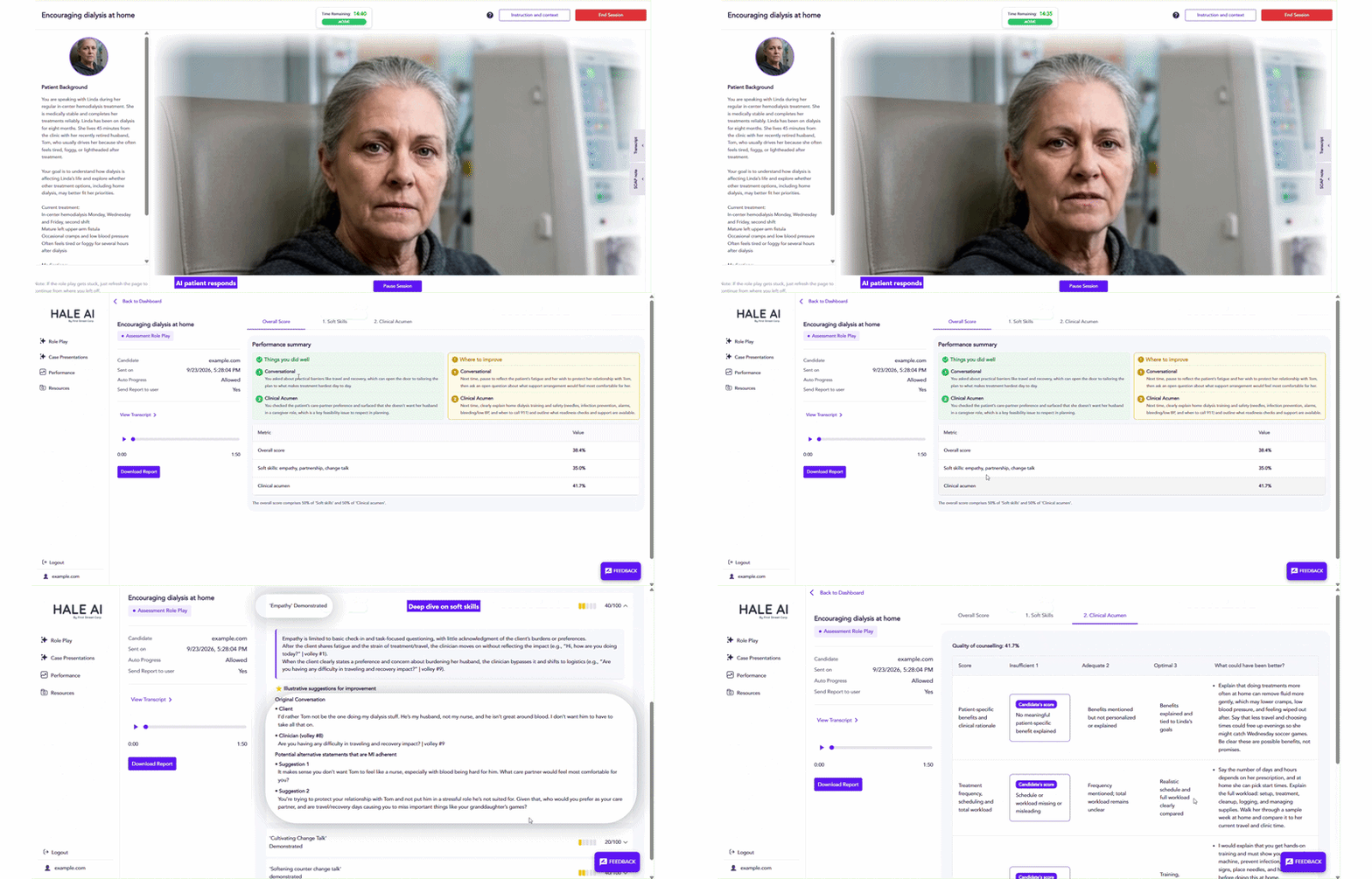
Hale AI’s simulation platform mirrors the complexity of modern healthcare, especially in care management, chronic disease support, and transitions of care. Through role-play simulations, clinicians can practice difficult patient conversations—such as addressing medication adherence, discussing dialysis, or navigating resistance to lifestyle changes—in a safe environment before applying them in real life.
Assessment simulations go a step further by evaluating performance within realistic interactions. Instead of relying on passive learning or quizzes, organizations can observe how clinicians build rapport, ask questions, review medications, and guide patients through next steps—even when patients push back or disengage.
Avatar-based simulations make this experience immersive, repeatable, and consistent. Clinicians can revisit scenarios multiple times, refining their approach without risk to real patients. This repeatability turns practice into lasting skill development.
Equip clinicians to confidently handle high-stakes conversations—request a demo.
What sets Hale AI apart is realism. Simulated patients do not simply cooperate—they resist, disengage, and challenge clinicians, just like real patients. This allows clinicians to practice balancing empathy with direction, building trust while maintaining structure, and integrating clinical expertise with effective communication.
Nurses who used the platform highlighted that the patient was not a pushover—and that this forced them to practice redirecting and taking appropriate control of the call.
“Each conversation wasn’t positive—patients weren’t looking to engage. It challenged me to redirect when the sim tried to push me away from the topic I was covering.”
— Registered Nurse
“The AI was not a pushover. The patient gave pushback, and that’s what they [nurses] need to practice.”
— Care management coach
Coaches saw this translate into practical gains for nurses who tend to be overly accommodating:
“I had a nurse who was so sweet she let the patient take control of the call. Hale AI gave her a safe environment to practice taking the conversation back.”
— Care management coach
Ultimately, Hale AI moves training beyond passive education to active, experiential learning—helping clinicians become more prepared, confident, and effective in the moments that matter most.
Hale AI Implementation at a Value-Based Care Organization: Partnering with Clinical Coaching to Scale Training

How Is Hale AI Beneficial for Nurses?

How Is Hale AI Beneficial for Clinical Coaches?

How Does Hale AI Help Drive Operational Efficiency in Care Management Operations?
Real-World Evidence Supporting Hale AI’s Approach to Clinical Training