
Industry Insights
How Is Hale AI Beneficial for Nurses?
Hale AI was implemented through a structured rollout in partnership with the organization's clinical coaching team supporting approximately 300 registered nurses (RNs) in telephonic care management. The goal was to help clinicians practice complex patient interactions through AI-powered simulations and receive structured feedback to improve clinical performance.

“Shadowing was hit and miss. You may not find a good call to shadow and may have to move on to the next nurse. Hale AI was the only way to get a good view of how the nurse is talking to the patient—especially around soft skills.”
— Care management coach
The implementation began with a coach-led testing and calibration phase. Clinical coaches first evaluated the simulation scenarios, scoring models, and reporting tools to ensure they accurately reflected real patient conversations and clinical expectations. This step helped align the platform with the organization’s care management protocols and coaching standards.
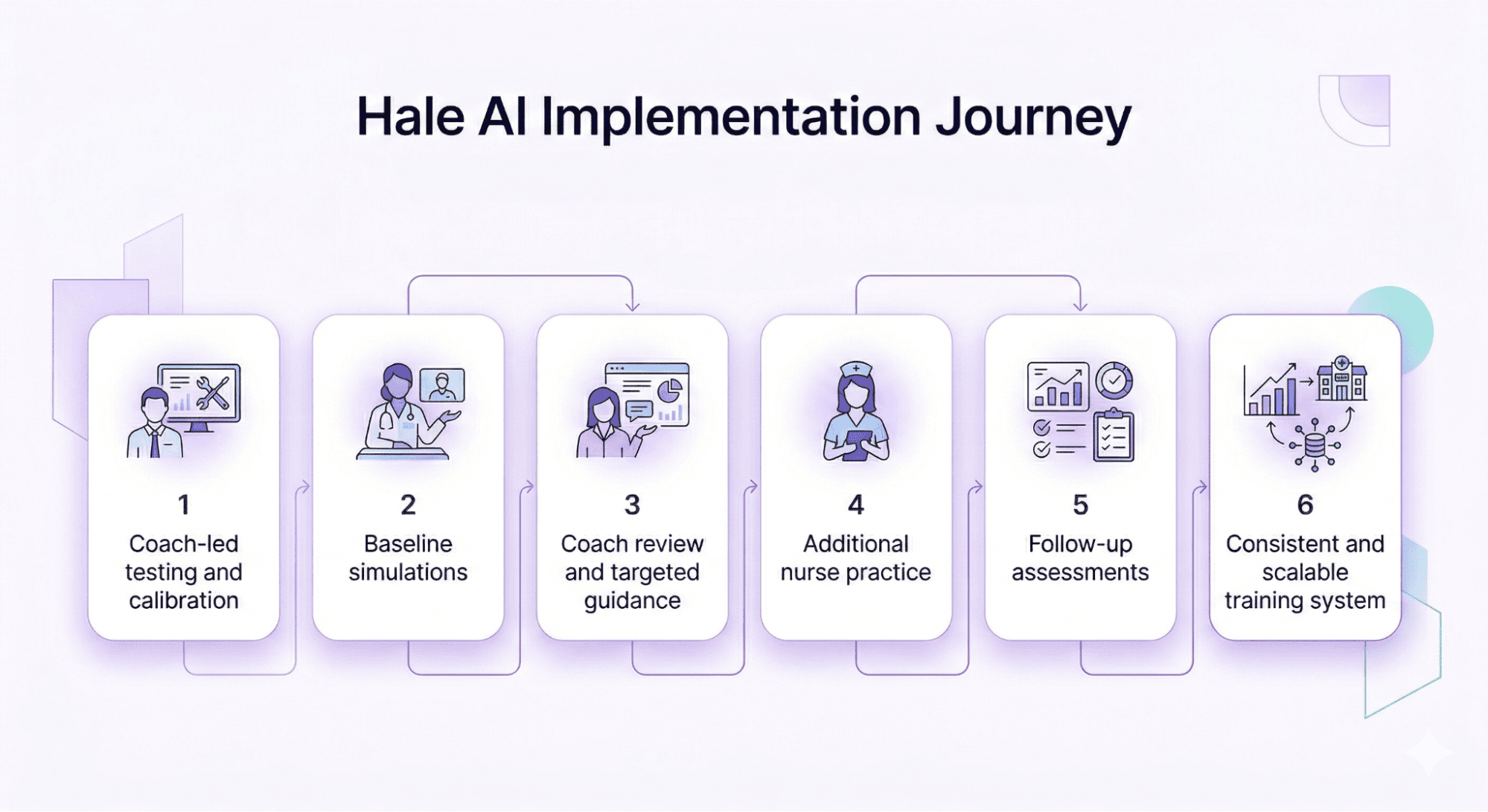
After calibration, Hale AI was rolled out to cohorts of nurses using a structured training cycle. Each group completed baseline simulations to establish their starting performance level. Coaches then reviewed the results, provided targeted guidance, and nurses continued practicing through additional simulations. Follow-up assessments were conducted to measure improvement and reinforce clinical behaviors.
Through this phased implementation, nurses were able to engage in realistic AI-driven patient role-plays, practice handling complex clinical scenarios, and receive immediate feedback based on their conversations. This process enabled the organization to create a consistent and scalable training system while providing coaches with objective insights into clinician performance.
The design also helped nurses understand what strong telephonic care management should be like.
“Hale AI gave me a clear blueprint for what an ideal telephonic care management call should look and sound like after moving from a hands-on clinical environment into less structured, phone-based care management.”
— Registered Nurse
In the end, the implementation succeeded because it combined realistic practice, structured evaluation, and coaching alignment into one system. Rather than relying on scattered observation, the organization created a repeatable model for preparing nurses, reinforcing best practices, and building confidence before those skills had to show up in real patient calls.
How Is Hale AI Beneficial for Nurses?

How Is Hale AI Beneficial for Clinical Coaches?

Simulations That Build Real-World Clinical Skills: How Hale AI Prepares Clinicians for the Conversations That Matter

How Does Hale AI Help Drive Operational Efficiency in Care Management Operations?
Real-World Evidence Supporting Hale AI’s Approach to Clinical Training